
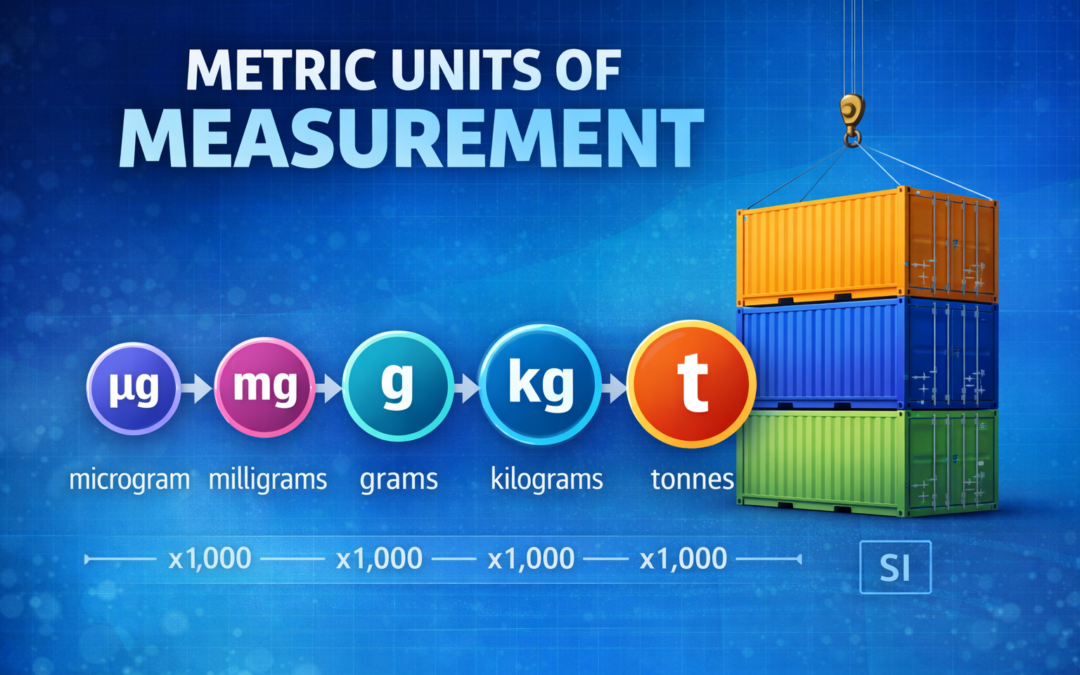
Metric units of measurement shape how you calculate length, mass, and volume in everyday life and professional settings across the United States. When you understand how the metric system works, you make faster decision-making choices in school, engineering, healthcare, and home improvement projects.
This guide breaks down metric units of measurement in a practical way so you can master conversions, avoid costly mistakes, and apply them confidently in real-world situations.
What Are Metric Units of Measurement
Metric units of measurement form a decimal-based system built on powers of ten, which makes calculations straightforward and consistent. You rely on base units such as the meter for length, the gram for mass, and the liter for volume to measure most physical quantities. Because each unit connects logically through prefixes, you can shift between values by multiplying or dividing by ten without memorizing complicated conversion tables.
This system differs from older measurement methods that depended on body parts like feet or cubits, which created inconsistent results. Today, the International System of Units, known as SI, standardizes measurements worldwide to ensure precision and fairness. When you use metric units of measurement, you benefit from a globally recognized structure that supports science, commerce, and technology.
Understanding Metric Prefixes and Place Value
Metric prefixes are the engine that drives the simplicity of the system and allow you to scale measurements up or down instantly. Each prefix represents a specific power of ten, which aligns perfectly with the base ten number system you already use.
When you move the decimal point left or right, you adjust values without complicated formulas.
Common Prefixes You Should Know
You should recognize these prefixes because they appear in textbooks, laboratories, and product specifications every day:
- kilo equals 1,000 units
- hecto equals 100 units
- deca equals 10 units
- deci equals one tenth
- centi equals one hundredth
- milli equals one thousandth
When you understand this pattern, you reduce conversion errors and improve calculation speed.
Metric Units of Length in Daily Life
Length is one of the most commonly used metric measurements in daily life and professional tasks. You measure short distances in millimeters and centimeters, moderate distances in meters, and long distances in kilometers. For example, a credit card is about one millimeter thick, a doorway is roughly two meters tall, and city-to-city travel is measured in kilometers.
The scientific definition of a meter is based on the distance light travels in a vacuum in 1/299,792,458 of a second, which shows the precision behind the system. This definition ensures that your measurements remain accurate across industries and continents. When you grasp these relationships, you strengthen your understanding of metric units of measurement at every scale.
Converting Between Metric Units Accurately
Converting metric units of measurement becomes simple when you rely on the base ten structure. To convert from a larger unit to a smaller unit, you multiply by powers of ten, and to convert from smaller to larger, you divide. For instance, 1 meter equals 100 centimeters, and 1 kilometer equals 1,000 meters.
If you frequently work with mixed systems, you can use digital tools to reduce manual errors. Many people prefer to convert feet to meters when switching between customary and metric systems for construction or academic work. By practicing these conversions regularly, you build speed and confidence in technical calculations.
Comparing Metric and Imperial Systems
The metric system operates on logical decimal relationships, while the imperial system relies on historical definitions that do not follow a consistent pattern. For example, 1 foot equals 12 inches and 1 mile equals 5,280 feet, which requires memorization rather than pattern recognition. Understanding this difference helps you appreciate why metric units of measurement dominate global science and engineering.
You still encounter imperial units in the United States, especially in construction and land measurement. When you calculate property dimensions, you might review guides like how to calculate square feet to bridge understanding between systems. This cross-system awareness strengthens your numerical flexibility.
Real World Applications in Construction and Home Projects
Metric units of measurement support accurate planning in building, renovation, and energy efficiency calculations. Contractors often convert between square feet and square meters when comparing international standards or imported materials. Accurate measurement directly impacts cost control, material estimates, and long-term performance.
If you manage painting projects, you might reference detailed discussions such as how many square feet does a gallon of paint cover to align surface area calculations with coverage rates. Even when the base measurement begins in feet, understanding metric equivalents prevents overspending. This practical integration highlights why mastering conversions protects your budget.
Metric Units in Science and Education
Science depends heavily on metric units of measurement because research requires universal consistency. Laboratories measure mass in grams and kilograms, volume in liters, and temperature in kelvin or Celsius. According to international standards organizations, more than 95 percent of the world’s population uses the metric system in official measurements.
When you study chemistry or physics, consistent units prevent calculation errors that could invalidate results. Medical dosages, for example, rely on milligrams and milliliters to ensure patient safety. By building a strong foundation in metric reasoning, you increase both academic performance and professional credibility.
Avoiding Common Conversion Mistakes
Even though the metric system is logical, mistakes occur when you misplace decimals or confuse prefixes. A common error happens when you treat millimeters and centimeters as interchangeable without considering the factor of ten difference. You avoid this problem by writing out the prefix relationships before performing calculations.
Another frequent issue appears when switching between metric and customary systems without a structured approach. Creating a simple conversion chart or using verified digital calculators reduces risk. Precision matters because small mistakes in measurement can lead to significant financial or scientific consequences.
Building Confidence with Practice
You build mastery by solving real problems rather than memorizing definitions alone. Practice converting classroom examples such as 3.5 kilometers into meters or 250 centimeters into meters until the decimal movement feels automatic. Repetition reinforces pattern recognition and strengthens your understanding of metric units of measurement.
You can also test yourself with real scenarios like measuring room dimensions or estimating travel distances. Apply both metric and imperial conversions to deepen comprehension. This hands-on approach transforms abstract concepts into practical skills.
Why the Metric System Supports Smarter Decision Making
The decimal foundation of metric units of measurement supports faster and more reliable calculations in professional environments. Engineers, healthcare providers, and scientists rely on this structure to reduce ambiguity and maintain quality standards. When you use a consistent system, you eliminate confusion and streamline communication.
Large-scale industries such as aerospace and pharmaceuticals depend on precise metric calibration to meet regulatory standards. Even small errors in measurement can compromise safety or compliance. By committing to accuracy, you protect outcomes and build trust in your results.
Conclusion
Metric units of measurement provide a logical, globally recognized system that simplifies calculations and strengthens precision in everyday and professional contexts. When you understand prefixes, master conversions, and apply them in real-world situations, you reduce errors and improve efficiency in school, construction, science, and home projects.
By practicing regularly and using reliable tools when necessary, you build lasting confidence that allows you to navigate both metric and customary systems with clarity and accuracy.
FAQs
What are metric units of measurement and why are they important?
Metric units of measurement are standardized units based on powers of ten, including meters, grams, and liters. They are important because they ensure global consistency in science, engineering, healthcare, and trade, allowing you to perform accurate calculations without complex conversion formulas.
What is the base unit of length in the metric system?
The base unit of length in the metric system is the meter. It is defined scientifically using the speed of light, which ensures precise global measurement standards. You use meters to measure everyday distances and apply prefixes for smaller or larger values.
How do metric prefixes make conversions easier?
Metric prefixes represent specific powers of ten, such as kilo for 1,000 and milli for one thousandth. Because each step increases or decreases by ten, you simply move the decimal point instead of memorizing complicated fractions or irregular conversion rates.
How many centimeters are in a meter?
There are 100 centimeters in one meter. Since the metric system follows a base ten structure, you multiply meters by 100 to convert to centimeters and divide by 100 to convert back, which makes calculations quick and predictable.
What is the difference between metric and imperial units?
Metric units use a decimal-based structure built on powers of ten, while imperial units rely on historical standards like 12 inches in a foot or 5,280 feet in a mile. The metric system simplifies conversions and supports global consistency.
Why does the United States still use imperial measurements?
The United States continues to use imperial measurements due to historical and cultural traditions. However, science, medicine, and many industries rely on metric units of measurement because they provide standardized accuracy and align with international practices.
What are the main metric units for mass and volume?
The primary metric unit for mass is the gram, and for volume, it is the liter. Larger or smaller amounts use prefixes such as kilogram or milliliter, allowing you to scale measurements efficiently without changing the system structure.
How can I quickly convert kilometers to meters?
To convert kilometers to meters, multiply the number of kilometers by 1,000 because one kilometer equals 1,000 meters. This direct power-of-ten relationship eliminates confusion and ensures that you can calculate distances accurately in seconds.
What are common mistakes when converting metric units?
Common mistakes include misplacing the decimal point or confusing similar prefixes such as milli and centi. You can prevent errors by writing out the prefix relationships first and verifying whether you should multiply or divide by ten.
Why is the metric system widely used in science?
Scientists use the metric system because it provides consistent, universal standards that simplify calculations and data sharing. Its decimal-based structure reduces conversion errors and ensures that research findings remain accurate and reproducible worldwide.