
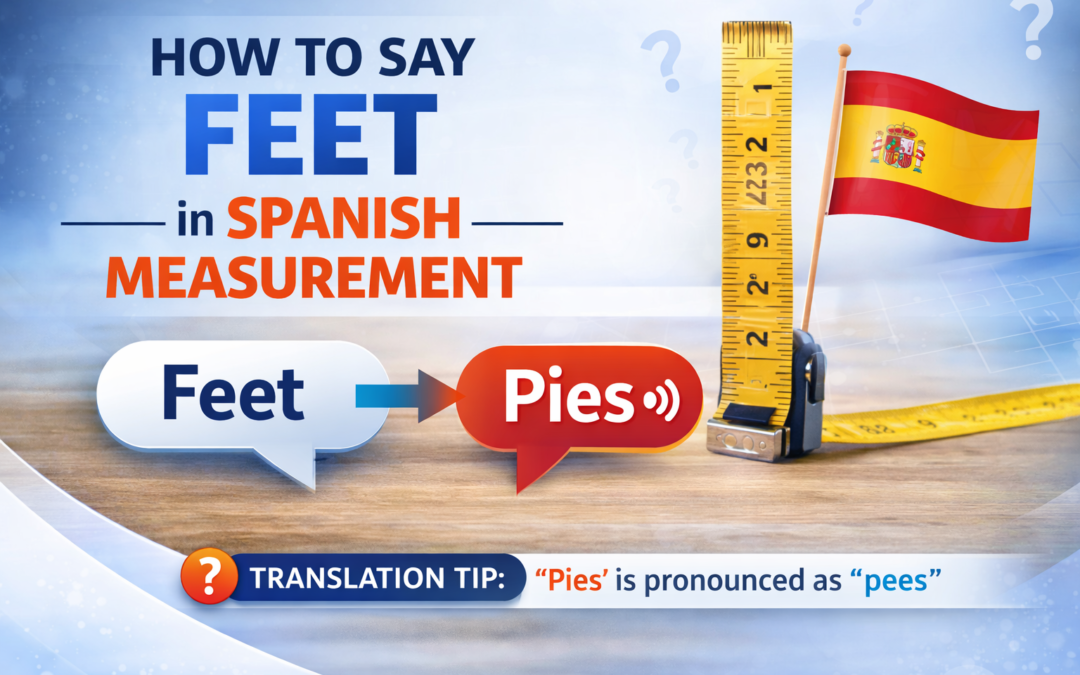
Understanding how to say feet in Spanish measurement units is essential when discussing height, distance, or dimensions with Spanish speakers. You may use feet daily in the United States, but Spanish-speaking countries often rely on the metric system. If you want to communicate clearly and avoid confusion, you must know the correct vocabulary, grammar rules, and context-based usage.
This guide explains how to say feet in Spanish measurement, when to use singular or plural forms, and how to structure numbers naturally in conversation. You will also see how measurement terms work within real-life situations such as describing a person’s height or calculating room dimensions.
By the end, you will confidently use Spanish measurement language without second-guessing your grammar or pronunciation.
Understanding the Word for Feet in Spanish
When you talk about measurement, the Spanish word for foot is “pie.” The plural form is “pies,” which you use when referring to more than one foot in length or height. This distinction matters because Spanish nouns must agree in number with the quantity mentioned in your sentence.
For example, if you say someone is six feet tall, you would say “seis pies.” If you refer to one foot, you would say “un pie,” which follows standard masculine noun rules. Because “pie” is masculine, you pair it with masculine articles like “el” for singular and “los” for plural.
Spanish uses precise grammatical structure when describing measurements. You do not simply translate word-for-word from English because sentence construction differs slightly. Instead, you structure numbers first, followed by the unit of measurement.
Singular vs Plural: Pie and Pies
You must always match the unit to the number used in your sentence. If the number is one, you use “pie,” and if it is two or more, you use “pies.” This simple agreement rule prevents grammatical mistakes that native speakers notice immediately.
For instance, “un pie de largo” means one foot long, while “diez pies de ancho” means ten feet wide. The noun changes form automatically based on the number that precedes it. This rule applies consistently across Spanish measurement vocabulary.
Spanish does not add an “s” sound loosely like English sometimes does in casual speech. Instead, the plural form is mandatory in formal and informal conversation alike. Accuracy builds credibility, especially when you discuss measurements professionally.
How to Use Feet When Describing Height
When describing height, Spanish uses a slightly different structure from English. Instead of saying “he is six feet tall” directly, you say “mide seis pies,” which literally means “he measures six feet.” The verb “medir” plays a central role in these sentences.
You could also say “ella mide cinco pies y cuatro pulgadas” to describe someone who is five feet four inches tall. Notice that inches are translated as “pulgadas,” which is feminine in Spanish. The sentence flows naturally when you place numbers before the measurement unit.
In online dating contexts, height is frequently converted between centimeters and feet. If you ever need clarity on adjusting profile measurements, you can reference how to change height from cm to feet on Tinder to ensure your numbers appear accurately for U.S. users.
Feet vs Metric System in Spanish-Speaking Countries
Most Spanish-speaking countries primarily use the metric system instead of feet. You will often hear “metros” instead of “pies” in everyday conversation. However, feet remain relevant when interacting with U.S.-based audiences or discussing imported standards.
If you describe a building in Mexico, Spain, or Colombia, locals may convert feet into meters for clarity. For example, six feet equals approximately 1.83 meters. Knowing both units allows you to communicate efficiently across systems.
The United States is one of only three countries that still widely use the imperial system, alongside Liberia and Myanmar. Because of this, bilingual communication requires flexibility and accurate conversions.
Converting Feet into Other Units
Conversion plays a major role in understanding measurements globally. One foot equals 12 inches and approximately 0.3048 meters. These figures matter when you switch between imperial and metric contexts.
If you need quick and accurate calculations, you can use tools that help you convert feet to meters without manual computation errors. Reliable conversion prevents costly mistakes in engineering, design, and construction projects.
Understanding these equivalencies also improves comprehension in bilingual documents. Many technical manuals list dimensions in both systems to support international audiences.
Using Feet in Construction and Electrical Contexts
Feet frequently appear in construction discussions across the United States. Electricians, builders, and contractors often measure wiring distances and structural dimensions in feet. Clear communication reduces safety risks and material waste.
For example, determining cable size depends on length and amperage requirements. When calculating electrical specifications, you may consult practical guides such as what size wire for 50 amps at 100 feet to ensure proper performance.
Spanish-speaking contractors working in the U.S. must understand both “pies” and technical vocabulary. Combining accurate measurement language with correct terminology improves professional credibility.
Expressing Dimensions with Feet in Spanish
When you describe dimensions, Spanish uses the word “por” to indicate length by width. For example, “diez pies por doce pies” means ten feet by twelve feet. This structure mirrors English but maintains Spanish grammar rules.
You might say “la habitación mide doce pies por quince pies,” meaning the room measures twelve by fifteen feet. The verb “medir” remains central when expressing size or length. Accuracy in word order ensures clarity in real estate and design conversations.
Spanish also adapts square measurements differently by adding “cuadrados.” For example, “pies cuadrados” means square feet, which you use when discussing area instead of linear distance.
Cultural Context: When Feet Are Common in Spanish
Although the metric system dominates globally, feet still appear in certain Spanish-speaking communities. U.S. territories like Puerto Rico often blend both systems depending on context. This bilingual measurement approach reflects cultural adaptation.
Media, sports commentary, and aviation sometimes reference feet even in Spanish broadcasts. Pilots worldwide, for example, measure altitude in feet rather than meters. This global aviation standard influences technical Spanish terminology.
Understanding these contexts prevents confusion during travel or business negotiations. Knowing when to use “pies” versus “metros” demonstrates cultural awareness.
Feet in Sports and Everyday Comparisons
Sports provide relatable examples of feet measurements. A standard American football field measures 360 feet long without end zones, which you might discuss using Spanish terminology. If you need clarification, you can review how many feet in a football field to visualize the scale.
Athletes’ heights also commonly appear in feet in U.S. sports media. Spanish commentators often convert these numbers into meters for international audiences. Understanding both formats allows you to follow broadcasts confidently.
Everyday comparisons, such as estimating furniture size or yard length, also rely on feet. Using “pies” correctly makes your descriptions precise and professional.
Common Mistakes to Avoid
One frequent mistake is confusing the body part “pie” with the measurement “pie.” While the spelling is identical, context determines meaning. If you say “me duele el pie,” you refer to your foot, not a unit of length.
Another common error involves forgetting plural agreement. Saying “seis pie” instead of “seis pies” immediately signals a grammar problem. Consistent number agreement strengthens your fluency.
You should also avoid translating directly from English sentence structure. Spanish requires verbs like “medir” when describing height or dimensions.
Practical Examples for Daily Conversations
You may say “la cerca mide ocho pies de alto” to describe a fence that is eight feet tall. This structure clearly places the number before the measurement unit. Native speakers expect this format.
If you describe interior space, you might say “el pasillo tiene veinte pies de largo.” The sentence maintains grammatical agreement and correct word order. These examples mirror real-life communication.
Practice strengthens retention, so incorporate “pies” naturally in conversation. Repetition builds confidence and eliminates hesitation when discussing measurements.
Conclusion
Learning how to say feet in Spanish measurement empowers you to communicate accurately in bilingual settings. You now understand that “pie” becomes “pies” in plural form and that Spanish uses verbs like “medir” to describe height and dimensions. These grammatical structures ensure clarity whether you discuss construction, sports, or everyday comparisons.
You also recognize the importance of converting between feet and meters when speaking with international audiences. Because most Spanish-speaking countries rely on the metric system, flexibility in unit usage prevents confusion. When you apply these rules consistently, you sound natural, precise, and culturally aware in any measurement-related conversation.